
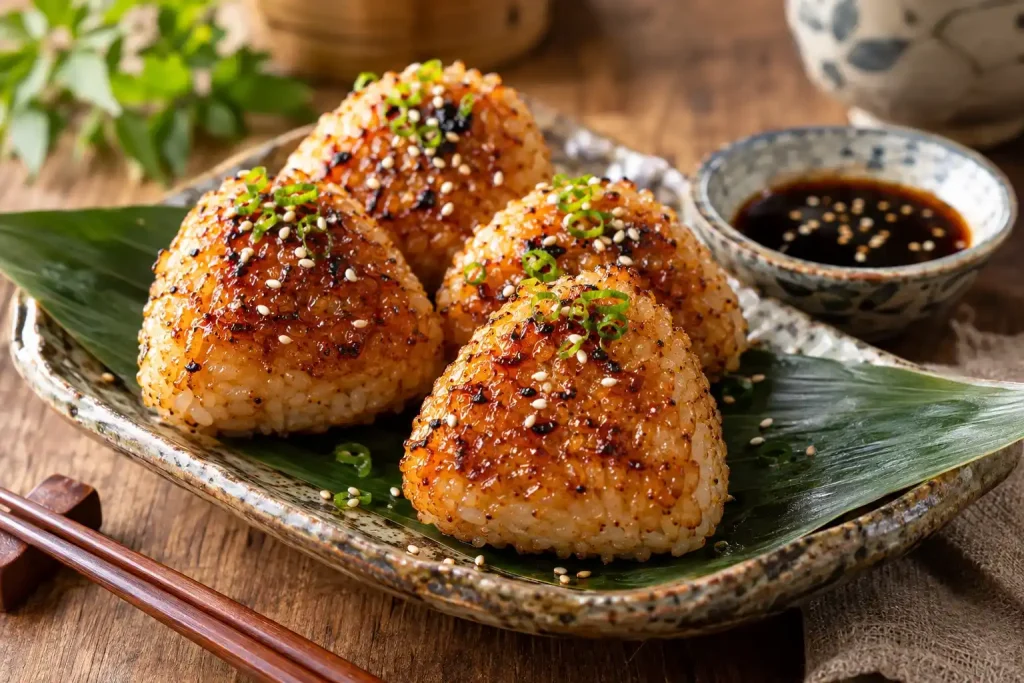
If you’ve ever fallen in love with plain onigiri, yaki onigiri is about to become your new obsession. This grilled version of Japan’s beloved rice ball takes everything comforting about steamed sushi rice and adds a crackly, caramelized crust brushed with savory soy sauce. Unlike traditional onigiri, which is often wrapped in nori and eaten cold or at room temperature, yaki onigiri is served warm, straight off the grill or pan, with a smoky, toasted aroma that makes it feel like a completely different dish.
Yaki onigiri has deep roots in Japanese comfort food and street food culture, showing up everywhere from home kitchens to festival stalls and izakayas (Japanese pubs). It’s simple enough for a weeknight dinner, yet impressive enough to serve to guests. Whether you’re using leftover rice from last night’s dinner or cooking a fresh batch specifically for this recipe, yaki onigiri is one of the easiest ways to turn humble ingredients into something genuinely craveable.
In this guide, you’ll learn exactly what yaki onigiri is, how to make it at home with or without a grill, and how to avoid the most common mistakes that keep people from getting that perfect golden crust.
What Is Yaki Onigiri?
Yaki onigiri (焼きおにぎり) translates literally to “grilled rice ball.” It starts the same way as regular onigiri — cooked, seasoned short-grain rice shaped into a triangle, cylinder, or round — but instead of being wrapped in nori and eaten as-is, it’s brushed with a soy sauce glaze (sometimes mixed with mirin, miso, or dashi) and grilled or pan-fried until the surface turns golden brown and slightly crisp.
The result is a rice ball with a crunchy, savory exterior and a soft, chewy interior. Historically, yaki onigiri is believed to have developed as a way to use up leftover rice while also preserving it slightly longer, since the toasting process reduces surface moisture. Over time, it became a comfort food staple, commonly found at Japanese festivals, roadside stalls, and in home kitchens as a satisfying end to a meal (rice grilled with the pan drippings from other dishes) or a snack on its own.
Today, yaki onigiri is popular both in Japan and internationally as an easy, flavorful way to enjoy Japanese rice balls with far more depth of flavor than the plain version.
Featured Snippet – What is Yaki Onigiri? Yaki onigiri is a Japanese grilled rice ball made from seasoned short-grain rice shaped into a triangle or round, then brushed with soy sauce and pan-fried or grilled until golden and crispy on the outside. It’s a popular comfort food and street food snack in Japan, often eaten warm as a side dish or light meal.
Why You’ll Love This Recipe
- Only a few ingredients. Rice, soy sauce, and a handful of pantry staples are all you truly need.
- Perfect for leftover rice. It’s one of the best ways to repurpose rice that’s a day or two old, since slightly firmer rice actually holds its shape better on the grill.
- Customizable. From classic soy sauce to miso-butter glazes, yaki onigiri adapts easily to different flavor profiles.
- No special equipment required. A nonstick skillet, grill pan, or even an air fryer will all get you a great result.
- Naturally vegetarian-friendly. The base recipe contains no meat or fish, making it easy to adapt for vegetarian and vegan diets.
- Great texture contrast. The crispy, slightly charred exterior against the soft, sticky interior is what makes this dish so addictive.
Ingredients

- 2 cups cooked short-grain Japanese rice (sushi rice), slightly cooled
- 2 tablespoons soy sauce
- 1 tablespoon mirin (optional, for a touch of sweetness)
- 1 teaspoon sesame oil (optional)
- 1/2 teaspoon salt (for shaping the rice)
- Neutral oil or butter, for grilling
- Optional garnish: toasted sesame seeds, sliced scallions, or a strip of nori
Ingredient Substitutions
- Mirin: If you don’t have mirin, substitute a small pinch of sugar mixed into the soy sauce for a similar sweetness.
- Soy sauce: Tamari works well for a gluten-free version. Low-sodium soy sauce is a good option if you prefer a milder glaze.
- Sesame oil: This is optional and can be left out entirely if you prefer a more traditional, simpler flavor.
- Butter instead of oil: For a richer, slightly nutty version, cook the rice balls in butter instead of neutral oil.
- Miso swap: Replace soy sauce with a mixture of white miso and a splash of water for a deeper, umami-forward glaze (miso yaki onigiri).
Best Rice for Yaki Onigiri
Short-grain Japanese rice, often labeled “sushi rice” outside Japan, is essential for yaki onigiri. Its higher starch content makes the grains sticky enough to hold their shape when pressed into a ball and grilled, unlike long-grain rice varieties such as jasmine or basmati, which tend to fall apart.
Slightly older, day-old rice actually works better than freshly steamed rice for this recipe. Fresh rice can be too soft and moist, making it harder to shape and more likely to break apart on the grill. Rice that has cooled and firmed up slightly holds together much better under heat.
Featured Snippet – What rice is best for Yaki Onigiri? Short-grain Japanese sushi rice is best for yaki onigiri because its natural stickiness helps the rice hold its shape while grilling. Day-old, slightly cooled rice works even better than freshly cooked rice, since it’s firmer and less likely to fall apart during cooking.
Kitchen Equipment Needed
- A rice cooker, Instant Pot, or pot for cooking short-grain rice
- A nonstick skillet, cast-iron pan, or grill pan
- A pastry brush (for applying the soy sauce glaze)
- A small bowl of water (to keep your hands damp while shaping the rice)
- Optional: an air fryer or oven with a broiler setting, for alternative cooking methods
How to Make Yaki Onigiri (Step-by-Step)
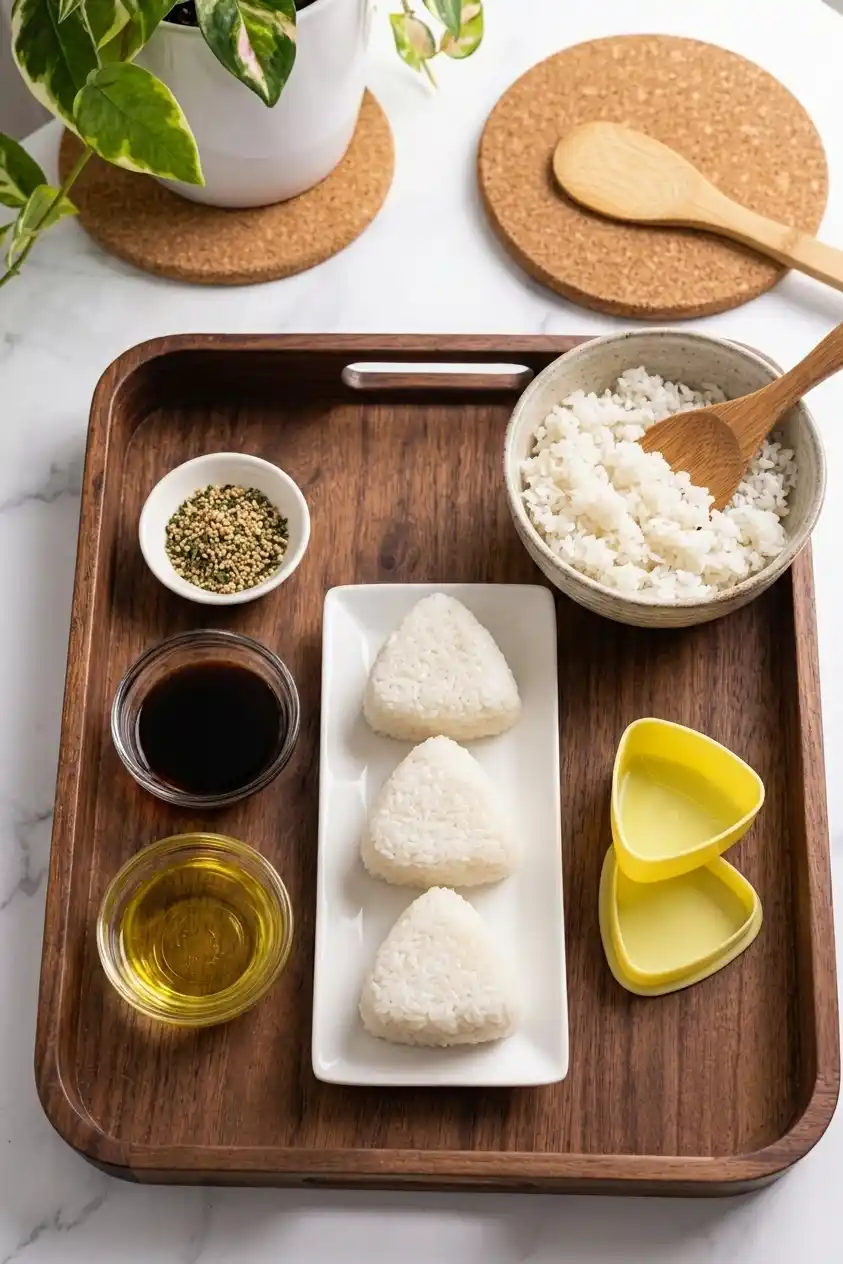
- Cook the rice. Prepare short-grain rice according to package instructions, using slightly less water than usual so the rice is a bit firmer. Let it cool until it’s comfortable to handle but still warm.
- Season the rice (optional). Sprinkle a small amount of salt over the rice, or mix in a splash of rice vinegar for extra flavor.
- Shape the rice balls. Wet your hands with the water bowl to prevent sticking. Take about 1/3 cup of rice and press it firmly into a triangle, cylinder, or round shape. Pack it tightly so it holds together on the grill.
- Prepare the glaze. In a small bowl, mix soy sauce with mirin (if using) until combined.
- Heat the pan. Add a small amount of oil or butter to a nonstick skillet or grill pan over medium heat.
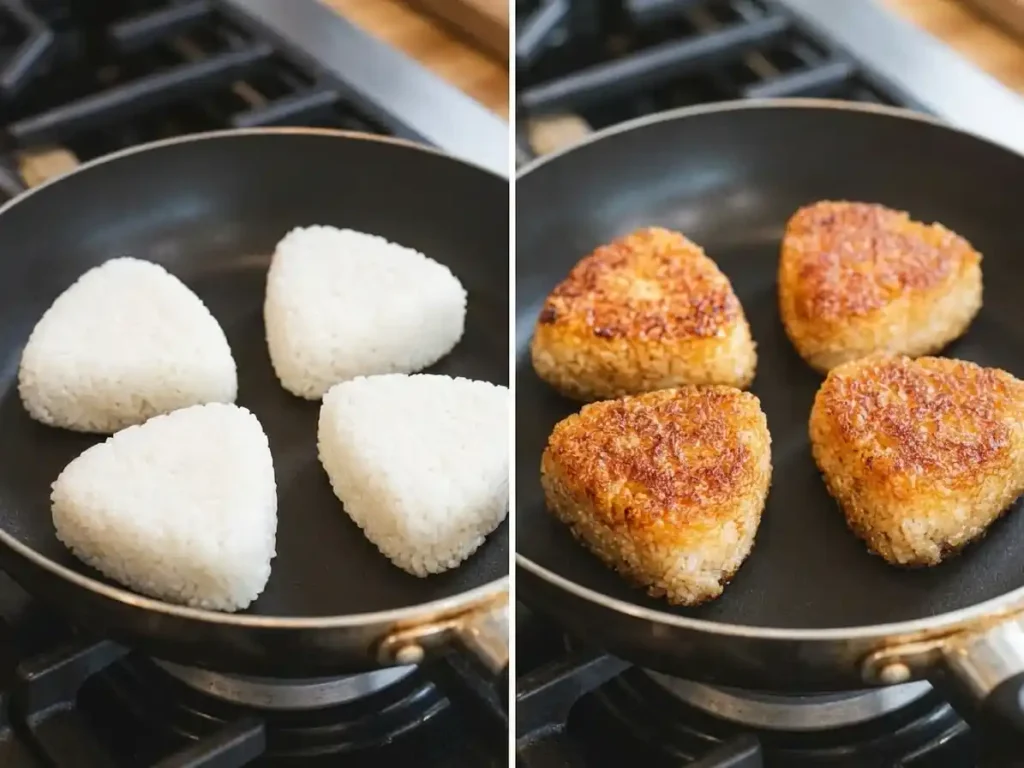
- Sear the first side. Place the rice balls in the pan and cook undisturbed for 3–4 minutes, until a golden crust starts to form on the bottom.
- Brush with glaze. Flip the rice balls and brush the seared side with the soy sauce mixture.
- Repeat on the other side. Cook for another 3–4 minutes, then flip again and brush the second side with the remaining glaze.
- Crisp it up. Continue flipping and brushing every couple of minutes until both sides are deeply golden brown and slightly crisp, about 10–12 minutes total.
- Serve warm. Remove from the pan and garnish with sesame seeds, scallions, or a strip of nori, if desired.
Expert Tips for Perfect Grilled Rice Balls
- Pack the rice firmly when shaping — loosely packed rice balls are more likely to fall apart while cooking.
- Don’t rush the sear. Let each side develop a proper crust before flipping; moving the rice balls too soon can cause them to crumble.
- Apply the soy sauce glaze in thin layers rather than pouring it on all at once, which can make the rice soggy instead of crisp.
- Use a nonstick or well-seasoned cast-iron pan to prevent sticking without needing excess oil.
- For extra crunch, press the rice balls slightly flatter than a traditional onigiri shape before grilling, which increases the surface area that gets crispy.
Common Mistakes to Avoid
- Using the wrong rice. Long-grain or basmati rice won’t hold together properly.
- Rice that’s too fresh and wet. This makes shaping difficult and increases the risk of the rice balls breaking apart.
- Overcrowding the pan. Give each rice ball enough space so it cooks evenly and develops a proper crust.
- Too much glaze at once. This leads to a soggy exterior rather than a crisp one.
- Flipping too often. Constant flipping prevents a solid crust from forming — be patient and let each side cook fully before turning.
Delicious Variations
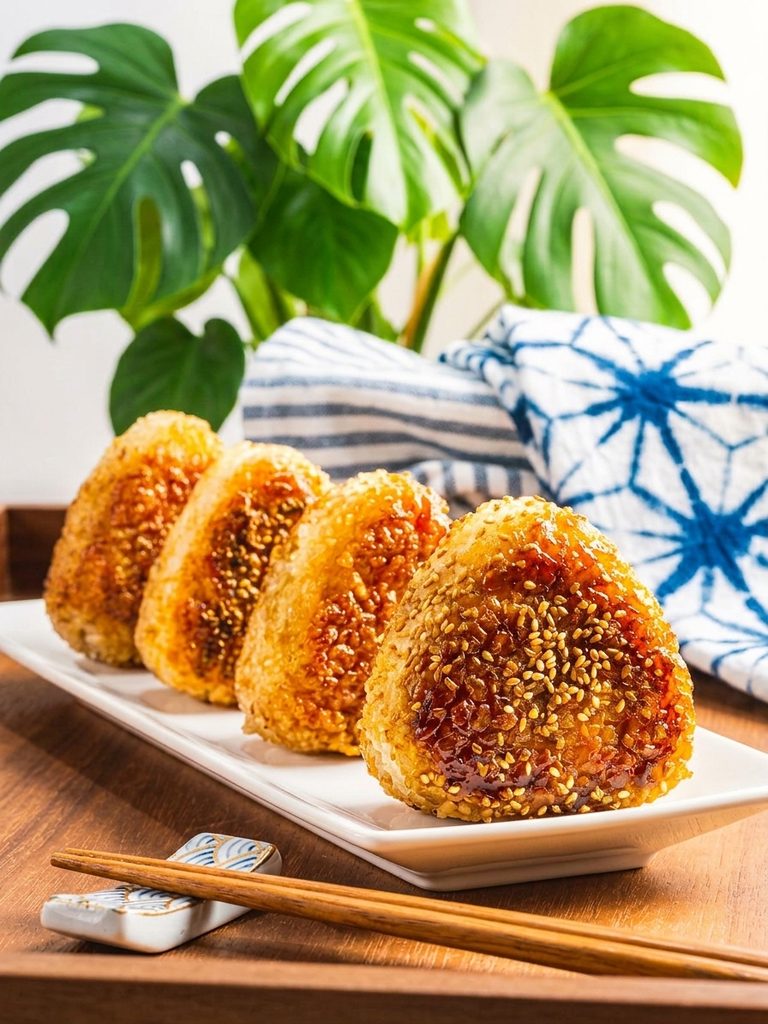
- Miso Yaki Onigiri: Swap the soy sauce glaze for a mixture of white miso, a touch of mirin, and water for a deeper, slightly sweet umami flavor.
- Cheese-Stuffed Yaki Onigiri: Add a small cube of melting cheese to the center of the rice ball before shaping for a gooey surprise.
- Furikake Yaki Onigiri: Mix furikake seasoning into the rice before shaping for extra flavor and texture.
- Spicy Mayo Yaki Onigiri: Finish with a drizzle of spicy mayo after grilling for a fusion-style twist.
- Vegetarian Umami Boost: Add a small amount of finely chopped shiitake mushroom or a dash of mushroom soy sauce to the glaze for extra depth without meat or fish.
What to Serve with Yaki Onigiri
Yaki onigiri pairs well with a variety of Japanese dishes and can be served as a side, snack, or light meal:
- Miso soup
- Simple pickled vegetables (tsukemono)
- Grilled fish or teriyaki chicken
- A simple cucumber salad
- Japanese curry, for a heartier meal
- A soft-boiled egg for a comforting breakfast twist
Storage and Reheating Instructions
Storing: Let leftover yaki onigiri cool completely, then store in an airtight container in the refrigerator for up to 2 days.
Reheating: Reheat in a skillet over medium heat for a couple of minutes per side to re-crisp the exterior, or use a toaster oven or air fryer for best texture. Microwaving works in a pinch but will soften the crust.
Freezing: Yaki onigiri can be frozen after cooking. Wrap each rice ball individually in plastic wrap, then place in a freezer-safe bag for up to 1 month. Reheat from frozen in a skillet or air fryer for the best texture, adding a few extra minutes of cooking time.
Featured Snippet – Can Yaki Onigiri be frozen? Yes, yaki onigiri can be frozen for up to one month. Wrap each rice ball individually before freezing, then reheat directly from frozen in a skillet or air fryer to help restore the crispy exterior.
Nutritional Information
Approximate values per rice ball (based on a standard recipe, may vary by size and ingredients used):
- Calories: 120–150
- Carbohydrates: 26–30g
- Protein: 2–3g
- Fat: 1–3g
- Sodium: 250–350mg (varies based on soy sauce quantity)
Featured Snippet – Is Yaki Onigiri healthy? Yaki onigiri is a relatively light, low-fat snack made mainly from rice and soy sauce, making it a reasonable choice in moderation. It’s naturally low in fat but can be moderately high in sodium, so those watching salt intake may want to use low-sodium soy sauce.
Frequently Asked Questions
1. What is the difference between onigiri and yaki onigiri? Regular onigiri is typically shaped rice eaten cold or at room temperature, often wrapped in nori and filled with ingredients like tuna mayo or salmon. Yaki onigiri skips the nori wrapping and filling in most traditional versions, and instead is brushed with soy sauce and grilled until crispy, giving it a warm, toasted flavor and texture that plain onigiri doesn’t have.
2. Can I make yaki onigiri without a grill? Yes. A nonstick skillet or cast-iron pan on the stovetop works just as well as a grill. You can also use a grill pan for light char marks, or an oven broiler if you prefer a hands-off method.
3. Do I need sushi rice for yaki onigiri? Short-grain Japanese rice (commonly labeled sushi rice) is strongly recommended because of its stickiness. Long-grain rice varieties don’t hold together well enough to survive shaping and grilling.
4. What sauce goes on yaki onigiri? The classic sauce is a simple mixture of soy sauce and mirin. Variations include miso-based glazes, teriyaki sauce, or a soy sauce and butter combination for extra richness.
5. How do Japanese people eat yaki onigiri? In Japan, yaki onigiri is commonly eaten as a snack, a side dish alongside miso soup, or a light meal on its own. It’s also a popular item at festivals and izakayas, often served hot off the grill.
6. Can yaki onigiri be made in an air fryer? Yes. Shape and glaze the rice balls as usual, then air fry at around 380°F (193°C) for 8–10 minutes, flipping and reapplying glaze halfway through, until golden and crisp.
7. Why does my yaki onigiri fall apart? This usually happens when the rice isn’t sticky enough (wrong rice type), the rice balls weren’t packed firmly enough while shaping, or they were flipped too early before a crust had formed to hold them together.
8. Can I make yaki onigiri ahead of time? Yes. You can shape the rice balls ahead of time and refrigerate them for up to a day before grilling, or fully cook them in advance and reheat before serving.
9. Is yaki onigiri vegetarian or vegan? The base recipe using soy sauce, mirin, and rice is vegetarian and vegan. Just double-check that your soy sauce and mirin brands don’t contain any hidden animal-derived ingredients, which is rare but worth confirming.
Final Thoughts
Yaki onigiri proves that some of the best comfort foods come from the simplest ingredients. With just rice, soy sauce, and a hot pan, you can create a dish that’s crispy, savory, and deeply satisfying — whether you’re using up leftover rice or making a batch specifically for this recipe. Once you’ve mastered the basic version, the variations are nearly endless, from miso glazes to cheese-stuffed centers. Try it once, and it’s likely to become a regular in your recipe rotation.
Print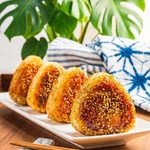
Yaki Onigiri (Grilled Rice Balls): The Ultimate Crispy Japanese Rice Ball Recipe
Description
Crispy, golden-seared Japanese rice balls brushed with a savory soy sauce glaze — a comforting snack or side dish made from just a handful of pantry staples.
Ingredients
2 cups cooked short-grain Japanese rice, slightly cooled
2 tablespoons soy sauce
1 tablespoons mirin
1 teaspoons sesame oil
0.5 teaspoons salt, for shaping
1 tablespoons neutral oil or butter, for grilling
1 teaspoons toasted sesame seeds, for garnish
1 tablespoons sliced scallions, for garnish
Instructions
Notes
Day-old rice works better than fresh — it’s firmer and holds its shape on the grill. For a richer flavor, swap the neutral oil for butter, or try a miso-based glaze instead of soy sauce.