
What Is Garlic Confit?
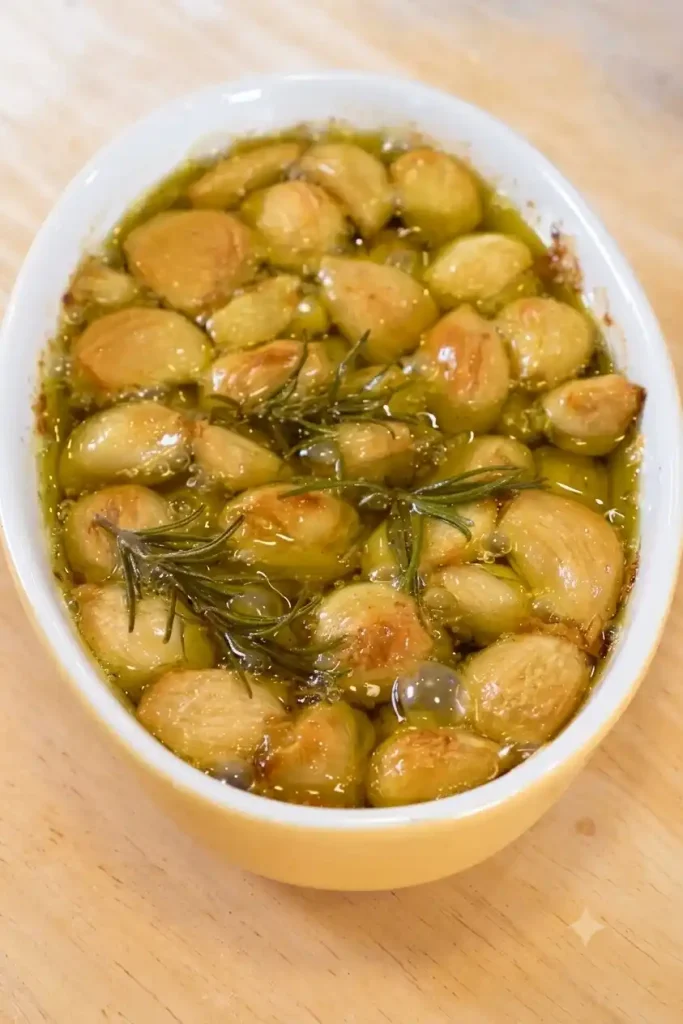
Garlic confit is whole garlic cloves slow-cooked in oil at a low temperature until they turn soft, sweet, and spreadable. The word “confit” comes from the French verb confire, meaning “to preserve,” and that’s exactly what this technique does — it transforms sharp, pungent raw garlic into a mellow, caramelized ingredient while also creating a fragrant, garlic-infused oil as a bonus.
Unlike roasted garlic, which is baked whole in its skin, garlic confit involves peeling individual cloves and submerging them in oil, then cooking them low and slow on the stovetop or in the oven. The result is two kitchen staples in one recipe: melt-in-your-mouth garlic cloves and a versatile golden oil, both of which can elevate almost any savory dish.
Why You Should Make Garlic Confit at Home
- Incredible flavor. Slow cooking mellows garlic’s harsh bite and brings out a deep, nutty sweetness.
- Two ingredients in one. You get soft, spreadable garlic cloves and garlic-infused oil.
- Long shelf life. Properly stored, garlic confit keeps in the refrigerator for up to two weeks.
- Effortless elegance. It takes minutes of hands-on work but delivers restaurant-quality results.
- Endless uses. Spread it on bread, stir it into sauces, toss it with pasta, or drizzle the oil over roasted vegetables.
Ingredients You’ll Need
- 2 to 3 whole heads of garlic (about 2 cups of peeled cloves)
- 1½ to 2 cups of neutral or olive oil (enough to fully submerge the cloves)
- Optional aromatics: fresh thyme, rosemary, bay leaves, whole peppercorns, or a pinch of red pepper flakes
- A pinch of salt (optional, for flavor and preservation)
Oil Tip: Extra virgin olive oil delivers the richest flavor, but a neutral oil like grapeseed or a light olive oil has a higher smoke point and a more neutral taste if you plan to use the infused oil in a variety of dishes. Some cooks blend the two for the best of both worlds.
Equipment
- A small, heavy-bottomed saucepan or oven-safe dish
- A paring knife for peeling
- A fine-mesh strainer
- A clean, airtight glass jar for storage
Step-by-Step Instructions
Step 1: Peel the Garlic
Separate the cloves from the heads of garlic. To peel quickly, smash each clove gently with the flat side of a knife — this loosens the skin so it slips off easily. Trim off any tough root ends, but keep the cloves whole.
Step 2: Choose Your Cooking Method
You can make garlic confit on the stovetop or in the oven. Both methods work well; the oven offers more hands-off, even cooking, while the stovetop gives you more control.
Stovetop Method:
- Place the peeled garlic cloves in a small saucepan.
- Pour in enough oil to fully submerge the cloves.
- Add any optional herbs or spices.
- Set the pan over the lowest possible heat.
- Let the garlic cook gently for 30 to 45 minutes, stirring occasionally. The oil should barely bubble — small, lazy bubbles, not a simmer or boil.
- The cloves are done when they turn golden and can be easily pierced with a fork.
Oven Method:
- Preheat the oven to 250°F (120°C).
- Place the peeled cloves in a small oven-safe dish and cover completely with oil.
- Add herbs or spices if using.
- Cover the dish tightly with foil or a lid.
- Bake for 60 to 90 minutes, checking occasionally, until the cloves are soft and lightly golden.
Step 3: Cool and Store
Let the garlic and oil cool to room temperature before transferring to a clean, airtight jar. Make sure the cloves stay fully submerged in oil, which helps preserve them and prevents spoilage.
Step 4: Refrigerate
Store the jar in the refrigerator for up to two weeks. The oil may solidify slightly when chilled — this is normal and will loosen again at room temperature.
Tips for Perfect Garlic Confit Every Time
- Keep the heat low. The biggest mistake home cooks make is cooking the garlic too hot, which burns the cloves and turns the oil bitter. You want a gentle, slow poach, not a fry.
- Use similarly sized cloves. This ensures even cooking throughout.
- Don’t skip the submersion. Cloves exposed to air can spoil faster, so always keep them fully covered in oil during storage.
- Add aromatics for extra depth. Fresh thyme, rosemary, or a bay leaf infuses the oil with additional complexity.
- Never store at room temperature. Garlic in oil can develop Clostridium botulinum bacteria if left unrefrigerated, so always keep your finished confit chilled and use it within two weeks.
How to Use Garlic Confit
The possibilities are nearly endless. Here are some of the best ways to use both the cloves and the infused oil:
- Spread it on warm crusty bread or crostini as an appetizer.
- Mash it into mayonnaise or aioli for sandwiches and dips.
- Stir it into mashed potatoes for a rich, garlicky twist.
- Toss it with roasted vegetables or pasta.
- Blend it into salad dressings and marinades.
- Whisk the oil into vinaigrettes, or use it for sautéing vegetables, searing meats, or finishing soups.
- Top pizza or flatbread with whole cloves before baking.
Frequently Asked Questions
How long does garlic confit last? When stored properly in the refrigerator with the cloves fully submerged in oil, garlic confit lasts up to two weeks. For longer storage, portion it into ice cube trays and freeze for up to three months.
Is garlic confit safe to store at room temperature? No. Garlic in oil creates a low-oxygen environment where botulism-causing bacteria can grow if left unrefrigerated. Always store garlic confit in the refrigerator and discard it if you notice any off smell, discoloration, or bubbling.
Can I use the garlic-infused oil for cooking? Yes. The infused oil is one of the best parts of this recipe. Use it for sautéing, drizzling over finished dishes, or as a base for dressings and marinades. Because homemade garlic oil carries a food safety risk if stored too long, use it within two weeks and always keep it refrigerated.
What’s the difference between garlic confit and roasted garlic? Roasted garlic is cooked whole, in its skin, in a hot oven, resulting in a firmer, smokier flavor. Garlic confit uses peeled cloves slow-cooked at a low temperature in oil, producing a softer texture and sweeter, more delicate flavor, along with a bonus of infused oil.
Why did my garlic confit turn brown or bitter? This usually means the oil was too hot. Garlic confit should cook at a low, gentle simmer — around 200 to 225°F (93 to 107°C) — never a boil. If the oil is bubbling rapidly, lower the heat immediately.
Can I make garlic confit without oven or stovetop supervision? A slow cooker on the “low” setting also works well and requires minimal supervision, though timing may vary depending on your appliance, so check the cloves periodically for doneness.
Final Thoughts
Garlic confit is one of those simple techniques that punches far above its weight in the kitchen. With just a few ingredients and a little patience, you’ll end up with two versatile staples — silky, sweet garlic cloves and a fragrant infused oil — that can transform everyday meals into something special. Once you try it, it’s likely to become a permanent fixture in your fridge.
Print
How to Make Garlic Confit: The Ultimate Step-by-Step Guide
Description
Whole garlic cloves slow-cooked in oil until soft, sweet, and spreadable — plus a bonus jar of garlicky infused oil.
Ingredients
- 2 cups garlic cloves, peeled
- 1.8 cups olive oil (or neutral oil)
- 2 fresh thyme or rosemary sprigs
- 1 bay leaf
- 0.5 teaspoons whole peppercorns
- 0.3 teaspoons salt
Instructions
Notes
Keep the heat low — small, lazy bubbles, never a simmer or boil, or the garlic will burn and the oil will turn bitter. Always store in the fridge, fully submerged in oil; never leave garlic confit at room temperature, since it can pose a botulism risk.