Description
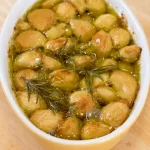
Whole garlic cloves slow-cooked in oil until soft, sweet, and spreadable — plus a bonus jar of garlicky infused oil.
Ingredients
Scale
- 2 cups garlic cloves, peeled
- 1.8 cups olive oil (or neutral oil)
- 2 fresh thyme or rosemary sprigs
- 1 bay leaf
- 0.5 teaspoons whole peppercorns
- 0.3 teaspoons salt
Instructions
Peel the garlic: Separate cloves from the heads. Smash each clove gently with the flat side of a knife to loosen the skin, then peel. Trim tough root ends but keep cloves whole. Use 2 cups garlic cloves, peeled.
Combine in a pan: Place the peeled cloves in a small saucepan or oven-safe dish. Pour in 1.8 cups olive oil (or neutral oil), enough to fully submerge the cloves. Add 2 fresh thyme or rosemary sprigs, 1 bay leaf, 0.5 teaspoons whole peppercorns, and 0.3 teaspoons salt.
Cook low and slow (stovetop): Set over the lowest possible heat. Cook gently, stirring occasionally, until the oil barely bubbles and the cloves turn golden and can be easily pierced with a fork.
Or bake low and slow (oven): Alternatively, preheat oven to 250°F (120°C). Cover the dish tightly with foil and bake, checking occasionally, until soft and lightly golden.
Cool and store: Let the garlic and oil cool to room temperature. Transfer to a clean, airtight jar, keeping the cloves fully submerged in oil.
Refrigerate: Store in the refrigerator for up to 2 weeks. The oil may solidify when chilled — this is normal and loosens again at room temperature.
Notes
Keep the heat low — small, lazy bubbles, never a simmer or boil, or the garlic will burn and the oil will turn bitter. Always store in the fridge, fully submerged in oil; never leave garlic confit at room temperature, since it can pose a botulism risk.